


Ayacucho Breads: A Book that Brings Together Tradition, Innovation, and Territory
Ayacucho bread does more than nourish the body—it also feeds memory, identity, and cultural continuity.
Chef and researcher Andrés Ugaz, president of the Patronato por la Cocina del Callao, master baker at Kala Tanta, and director of the consultancy CIT (Cuisine, Identity and Territory), has published the book “Ayacucho Breads: Essays and Testimonies of a Bicentennial Tradition.” This work highlights the cultural value of bread as a symbol of community, resilience, and local knowledge.
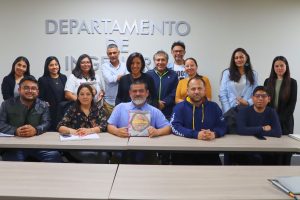
A collective process for safeguarding tradition
The book is the result of a participatory process involving women bakers, farmers, institutions, and international partners. Rather than simply documenting recipes or ancestral techniques, it proposes a Safeguarding Plan for Ayacucho Bread, aimed at strengthening the entire value chain surrounding this living tradition.
Key objectives include:
- Certifying the professional skills of women bakers in Ayacucho
- Developing locally sourced, traceable Ayacucho wheat flour
- Incorporating clean technologies into production processes
- Designing the “Ayacucho Bread Route,” linking gastronomy, culture, and territorial tourism
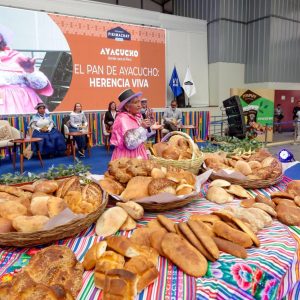
A manifesto for sustainable development
More than a cookbook, “Ayacucho Breads” is a manifesto demonstrating how collaboration between local knowledge, academia, private enterprise, and international cooperation can foster sustainable development while strengthening cultural pride.
The publication has been nominated for the Gourmand World Cookbook Awards 2025 as Best Bread Book in the World, a recognition of its contribution to the valorization of Peru’s intangible cultural heritage. The awards ceremony will take place in Riyadh, Saudi Arabia, from November 26 to 30.
Building a living value chain
The Safeguarding Plan is already underway thanks to the collaboration of multiple actors, including the National Institute for Agrarian Innovation (INIA), Benoti (Molino El Triunfo), the Andes Resilient Project (an initiative of the Swiss Cooperation – COSUDE, implemented by Helvetas Peru and Fundación Avina), the Pontifical Catholic University of Peru, the Patronato Pikimachay, and the Ministry of Agriculture and Irrigation (MINAGRI), among others.
Family farming, private enterprise, public institutions, academia, and international cooperation are coming together to restore Ayacucho’s agricultural legacy. As Andrés Ugaz explains: “Beyond planting wheat, the goal is to build a living and sustainable chain: producers committed to their land, institutions supporting research and certification, mills investing in locally rooted flour, and bakers crafting bread that tells a story.”
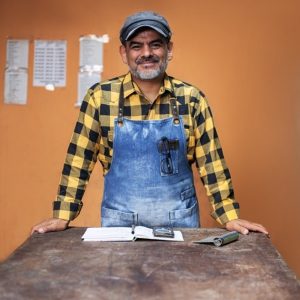
From local roots to global impact
From Diversidad & Desarrollo and the Biocultural Diversity and Territories Platform, we celebrate this initiative, which embodies the spirit of Juntanza: bringing together cultures, knowledge systems, and people who, from their territories, are transforming realities and amplifying their voices to the world.
You can learn more about this project and watch interviews with Andrés Ugaz here:
– Facebook interview
– YouTube interview: “Ayacucho Breads: One of the Four Best Books in the World!”
Leave a Reply