


Territories in Dialogue: Shared Learnings in Northern Chile
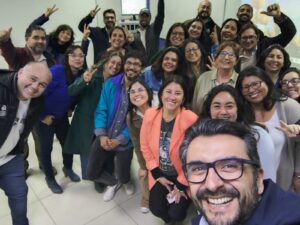
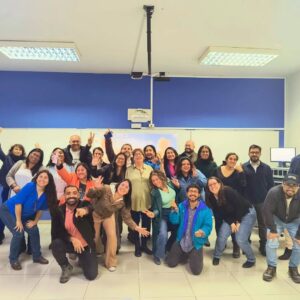
Between July 20 and 26, Claudia Ranaboldo, coordinator of the Biocultural Diversity and Territories Platform, was part of the team that lived through an intense and enriching experience in the region of Tarapacá, Chile. Invited by the Arturo Prat University (UNAP), she participated as lecturer in the Diploma in Territorial and Community Development, sharing learnings, experiences, and reflections with students, faculty, Indigenous communities, and diverse territorial actors.
It was a week where the diversity of knowledge became a driving force for dialogue, critical analysis, and concrete proposals for the present and future of the territories.
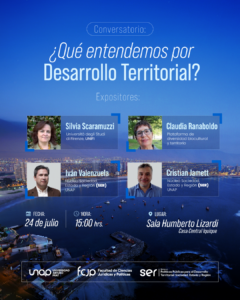
Diploma in Territorial and Community Development: Thinking and Acting from Biocultural Heritage
Over several sessions, Claudia facilitated the Territorial Management Module from Biocultural Heritage, accompanied by Silvia Scaramuzzi from the Università degli Studi di Firenze (UNIFI). Together with students—professionals from the public, private, and academic sectors—they worked on analytical frameworks and concrete experiences from Latin America and Europe, highlighting the importance of biocultural heritage as the foundation for identity-based development processes.
This diploma, organized by the Institutional Office of Territorial Initiatives (OFIIT), builds on previous experiences developed by the DT-IC / Rimisp Program and the Platform, later expanded under the SUS-TER project, co-financed by the European Union, with UNAP as an associate entity. These initiatives have promoted innovative academic training based on the dialogue of knowledges, the territorialization of knowledge, and the strengthening of local capacities.
Today, they are being renewed through the Erasmus KA171 project (faculty and student exchange between UNIFI and UNAP), and through the Research Hub on Public Policies for Territorial Development: Society, State, and Region (SER), in which the Platform is also involved.
The exchange was enriched by the participants’ contributions, who presented case studies focused on Northern Chile, addressing the challenges of new ruralities, biodiversity conservation, and cultural heritage valorization—particularly in Tarapacá, a region where numerous public institutions and private companies, including mining, converge, and where the environmental challenges of the desert landscape and climate change are especially evident.
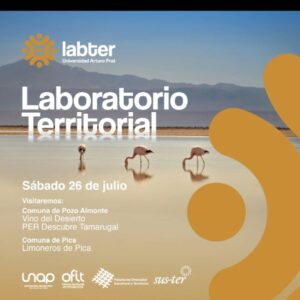
LABTER: Making the Territory a Living Classroom
One of the most meaningful experiences was the Territorial Laboratory (LABTER), held in the municipalities of Pozo Almonte and Pica. Although limited to a single day, LABTER provided an immersion exercise and dialogue through the following initiatives:
-
Vino del Desierto – Canchones Experimental Station: A project led by Arturo Prat University for over 20 years, rescuing heritage grape varieties to produce wine under extreme aridity.
-
Lemon Growers of Pica – Agriculture in the Oasis of Pica: A family enterprise cultivating lemons and other crops in an oasis ecosystem with innovative water supply systems.
The LABTER also involved local actors and organizations, such as the Territorial Quechua Community of Quipisca, represented by Wilfredo Bacian Delgado, and PER Descubre Tamarugal, led by Álvaro Casas Caniguante. Participants explored the importance of initiatives rooted in culturally grounded territorial development plans; emblematic tourism routes that can energize territories; and biodiversity-rich plots such as La Sacristía in Pica, recognized as part of the SIPAN system (Important System of National Agricultural Heritage).
This exercise of territorial connection made it possible to recognize local challenges and knowledge, reveal tensions and opportunities, and reaffirm the need to strengthen horizontal ties between academia, communities, and local transformation processes. LABTER is more than a pedagogical tool: it is a way of recognizing knowledge from the territory’s own teachers, moving beyond the conventional logic of one-way academic transfer.
Dialogues with Local Communities: Ancestral Knowledge and Active Citizenship
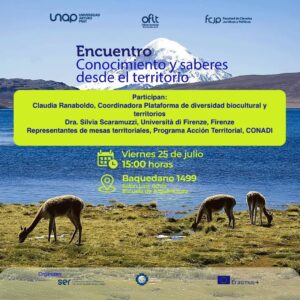
On July 25, the first meeting on “Territorial Knowledge and Wisdom” was held, organized by the Faculty of Legal and Political Sciences, the SER Research Hub, and the National Corporation for Indigenous Development (CONADI). Moderated by Cristian Jamett and Alexander Martin Pérez Mora (UNAP), it gathered representatives from over 15 Aymara and Quechua communities from the municipalities of Huara and Pozo Almonte.
Claudia Ranaboldo shared insights on the notion of “empowered territories”, stressing the crucial role of active citizenship and subnational governments in strengthening territories through their own capacities and knowledge. She highlighted particularly the case of Bolivia, with its achievements and challenges in Indigenous territorial management.
From Italy, Silvia Scaramuzzi presented reflections on biocultural tourism as a tool for heritage valorization and local economic activation.
The meeting revealed the lack of inter-institutional coordination—both public and private—as well as rural depopulation processes. Yet it also showcased the strength of Aymara and Quechua identities, along with ongoing initiatives promoted by CONADI and communities such as Quipisca.
Current Challenges in Territorial Development
The week also included an inter-faculty dialogue titled “Territorial Development: Evolution, Challenges, Perspectives”, held at Arturo Prat University. Participants included Cristian Jamett, Cristian Ortega, Silvia Scaramuzzi, and Claudia Ranaboldo, who discussed the main challenges facing territories today: the threat of extractivism, the need for a just ecological transition, and the urgency of implementing truly decentralized policies.
Some of the issues addressed were:
-
The evolution of the concept and practice of territorial development in Latin America and Europe.
-
The emergence of differentiated strategies: some focused on an “emblematic product” logic, and others (more common in Latin America) grounded in a systemic vision of territorial assets.
-
Emblematic cases that offer cautious lessons—such as Chiloé in Chile, with its SIPAN seal built from the ground up, and the Callao, Peru, experience around artisanal fishing and agri-food heritage.
-
The key factor of expanding multi-level and multi-actor capacities.
-
The role of universities, caught between innovation and the need for structural reforms.
The conversation also raised a critical reflection on how to re-signify the cultural landscape of the desert—too often perceived as empty or extreme—by recognizing it instead as a human, agricultural, and symbolic ecosystem full of life, history, and knowledge.
Reencounters with a Shared History
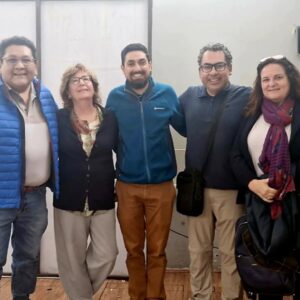
The Biocultural Diversity and Territories Platform has more than a decade of collaboration with northern Chile. From the first exchanges with the Quechua Community of Quipisca, to alliances with Arturo Prat University, INDAP, and local and public actors, a web of relationships has been woven that continues to bear fruit.
This visit was also a reunion with people, processes, and territories still committed to advancing development with a human face and territorial identity.
Throughout the week, key meetings were also held with authorities such as Vice-Rector Mariela Bazán and Regional Governor José Miguel Carvajal, opening the possibility of exploring new strategic alliances. From the Platform, we hope to continue identifying opportunities for joint collaboration with Arturo Prat University, the Watawataña Corporation, and other actors committed to bottom-up territorial transformation.
This note is complemented by a related publication produced as part of this experience.
Leave a Reply