


Stories of Resilience: Reflections After the Brazil–Italy Initiative
Just over a week ago, I left the city of Garopaba, where every single day was a constant learning experience—an enriching journey that allowed me to immerse myself in the daily lives of local communities. Thanks to the initiative “Sinergia Brasil–Italia – Conectar – Descobrir – Identidade” and the ADTC (Associação Desenvolvimento Territorial Costa Catarina), I had the unique opportunity to live with families from different territories, sharing their meals, their stories, and their traditions. More than a cultural exchange, it was a deep journey through identity, resilience, and love for the land.
Each experience was a gift—a succession of emotions filled with learning, wisdom, and love. I learned about the profound relationship these communities have with their territory and witnessed their unwavering commitment to preserving their identity and environment.
In every household I lived with, I found a fragment of a greater family. Here in Garopaba, I felt part of something much larger: a fabric of people, stories, and traditions woven together with nature and time.
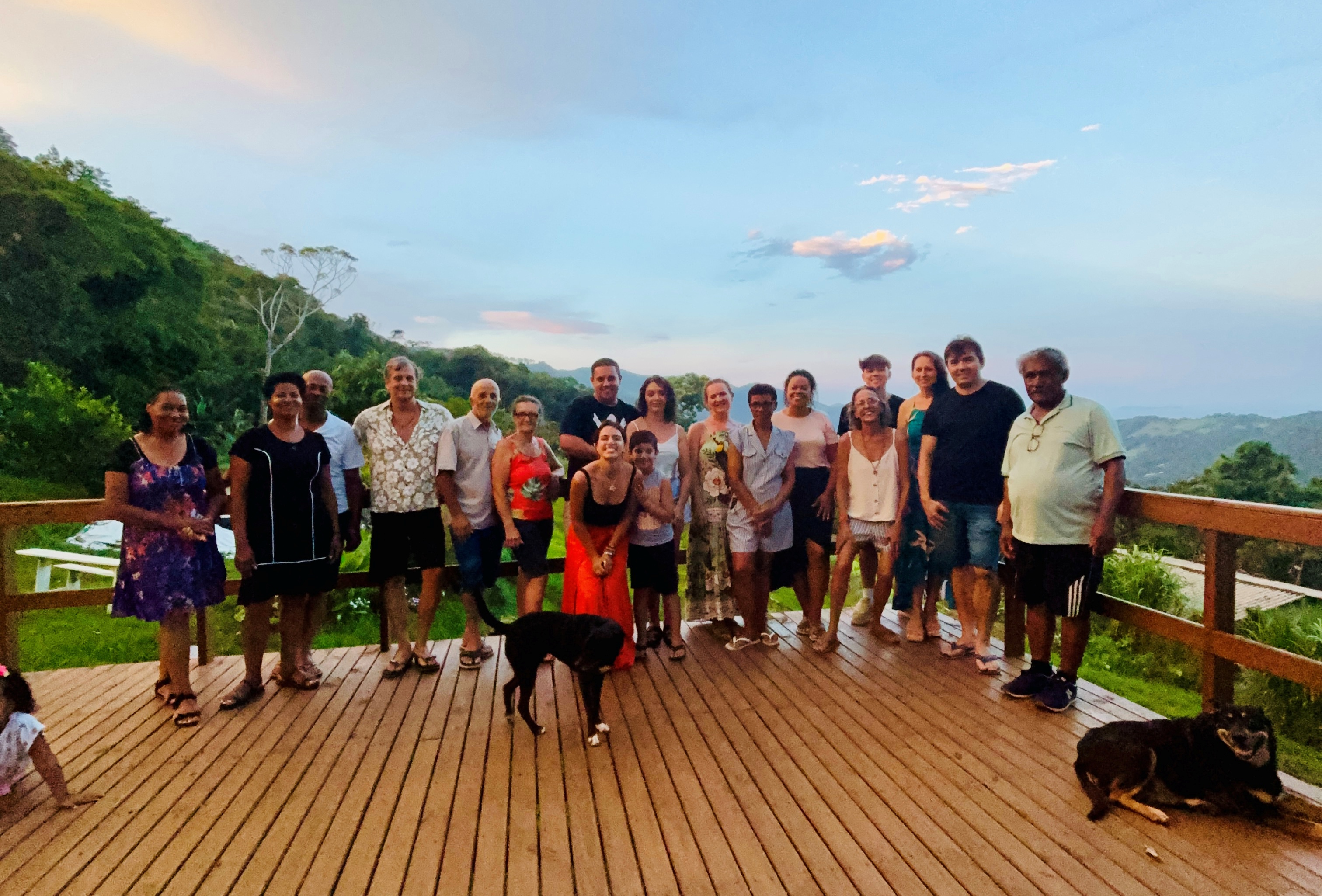
The Journey continues
During a special visit with ADTC, I joined students from IFSC (Instituto Federal de Santa Catarina) on a tour of Horta de Hilário Verduras, where I had previously spent a week living alongside the wonderful family that tends the garden.
At the Quilombo, the IFSC students experienced unforgettable moments. At Horta de Hilário Verduras, they met Hilário’s daughters—two women who, after their father’s accident, took charge of the garden with determination. Not only did they keep it alive, but they expanded it, securing funds to build a veranda and a small café overlooking the valley. Their story touched everyone—not just for the effort it required, but for the warmth and love with which it was shared. Later, Hilário’s brother recounted the community’s struggle for the recognition of their land. His words, steeped in history and lived experience, made the students realize that this place is far more than fertile soil: it is identity, resilience, and home.
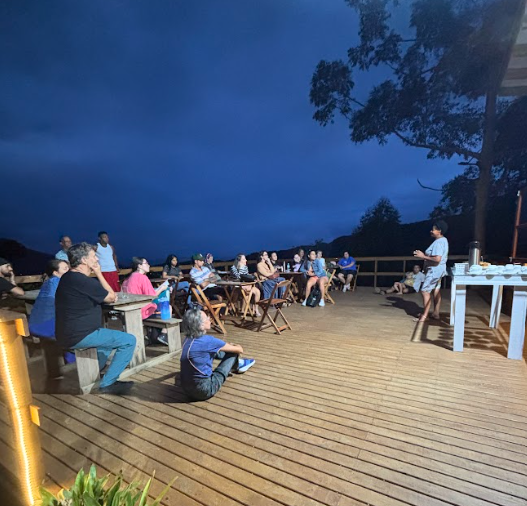
The journey continued at the Souza family’s Engenho da Cachaça, where production remains faithful to tradition. Amid the scent of sugarcane and the sound of grinding, the students witnessed the patient and meticulous work behind every drop of cachaça. With curiosity, they asked questions, laughed at the hosts’ anecdotes, and marveled at the skill of those who had devoted their lives to this craft. But when the conversation turned to cutting sugarcane under the blazing sun, the mood shifted: everyone enjoyed the taste of cachaça, yet few had imagined the effort required to bring it to their glasses.
More than a visit, it was an invitation to look beyond the obvious—to listen to the stories behind every harvest, every bottle, every silent struggle.
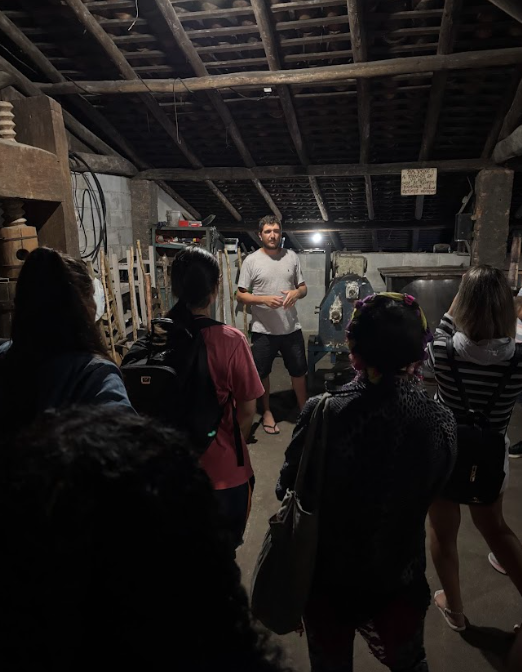
At the same site, the Alambique Vó Zeca, I spent a week fully immersed in the routine of a family producing artisanal cachaça. I was able to “get my hands dirty,” as the Brazilians say, and feel firsthand both the hardship and the satisfaction of fieldwork.
Each morning began with breakfast on the hillside, surrounded by breathtaking scenery. Then, under the blazing sun, I helped cut sugarcane, fed the still’s fire, and took part in each stage of production. I came to understand that every bottle is much more than just a drink: it is the fruit of effort, patience, and love for a tradition that has stood the test of time.
Returning home each day, fatigue was washed away by the warmth of family life. Between card games and homemade meals, I shared moments with the women who, through quiet dedication, have sustained this work for generations. Beyond the labor, what truly keeps the engenho alive is the spirit of community and the profound respect for the land and its knowledge.
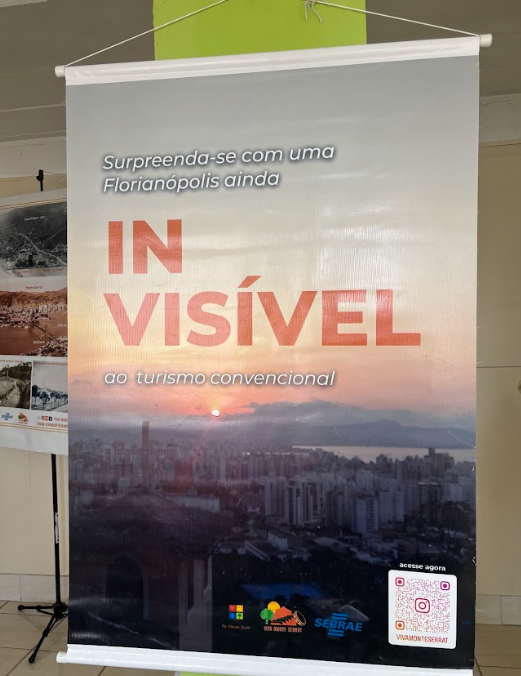
On February 8, together with ADTC representatives and two women from the communities involved, I joined a community tourism tour of the Monte Serrat neighborhood in Florianópolis, organized by the Viva Monte Serrat project.
Florianópolis is famous for its paradise beaches, vibrant nightlife, and world-class tourist infrastructure, attracting visitors from around the globe. Yet few are aware of the history of Morro da Caixa, a community with deep roots that has weathered the challenges of time.
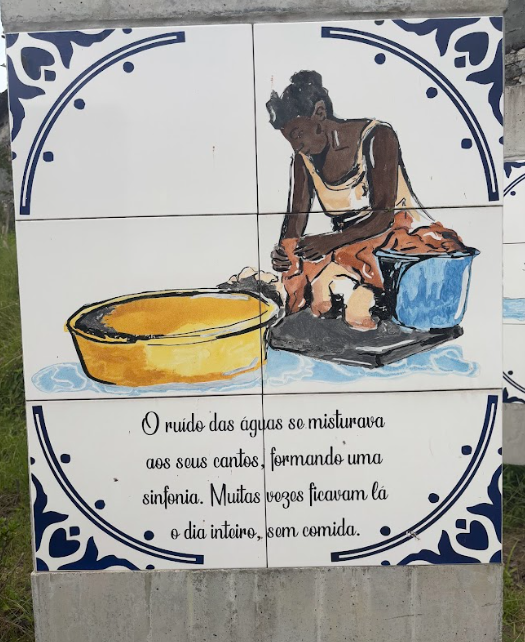
The neighborhood’s name comes from the first water reservoir built on the island in 1910, but running water did not arrive until 1983. Until then, the entire community had to adapt to life without this essential resource, organizing with rudimentary cisterns, collecting rainwater, and finding ways to share the little they had. The women “washers” would walk long distances to fetch water, carrying it on their heads or in improvised carts—an exhausting daily effort.
Without adequate access to basic services, many families continue to face invisible barriers that limit their opportunities. Nevertheless, the community endured, sustained by solidarity and resilience, building support networks that remain part of its identity today.
Guided by residents, we walked along historic paths and listened to stories of resistance and unity. It was a deeply moving experience that revealed another face of Florianópolis—one less visible to conventional tourism, beyond postcard landscapes, and into the strength of its communities.
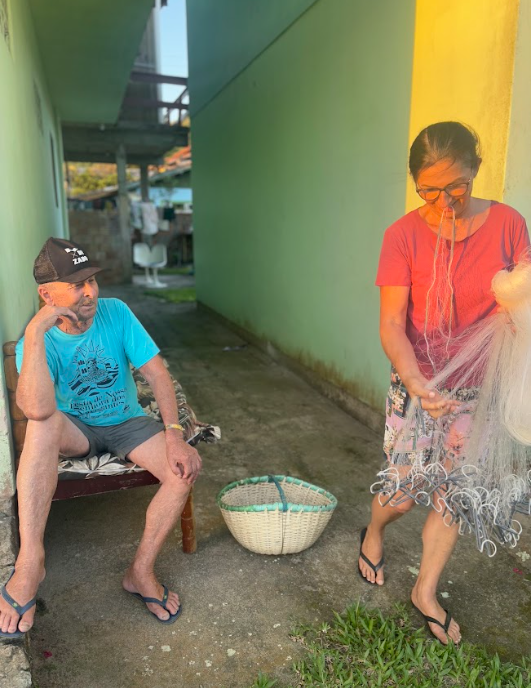
I was fortunate and honored to meet the fishing community of Garopaba. It was moving to see Maria’s joy and pride when speaking about her passion for fishing. Her eyes sparkled as she shared her experiences and even mimicked with enthusiasm the traditional techniques of casting the tarrafa net.
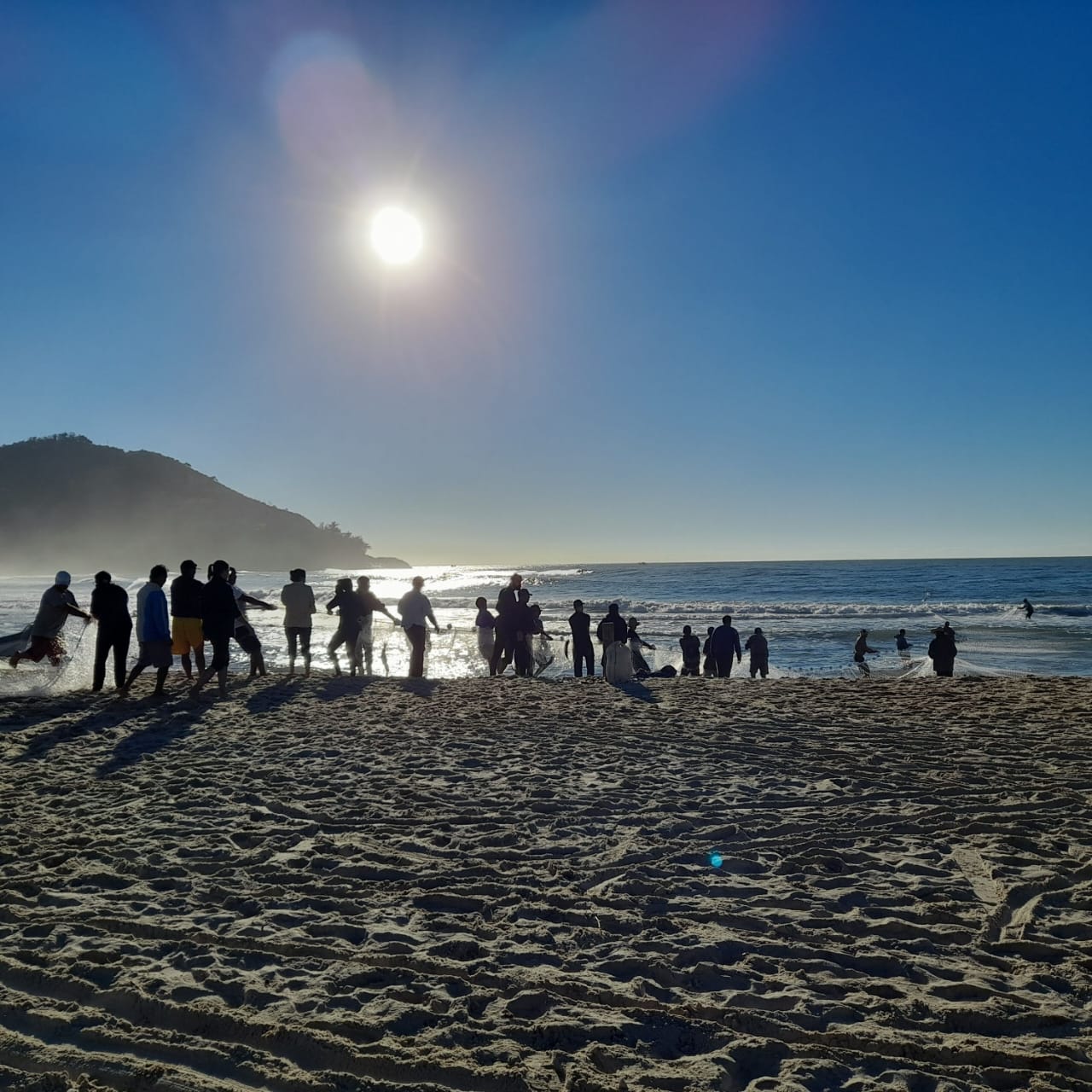
Maria shared moments of deep connection with nature and with others. During the tainha (mullet) fishing season, not only does her whole family participate—whether fishing or preparing meals in the traditional fishing huts—but other community members also join in. Everyone helps pull in the heavy nets filled with fish, and in the end, each person receives a tainha as a reward. There are no disputes, no demands—only solidarity and a strong spirit of cooperation. People line up and share the fruits of their collective labor.
If one family cannot go fishing, they notify another so they can take their place. The same happens if the fish change direction—information is shared freely. Maria and her sisters have fished alongside their father since childhood, never seeing it as an obligation. On the contrary, they eagerly await this season every year to cast the tarrafa into the sea and celebrate together.
My entire experience in Garopaba was wrapped in music, making it even more vibrant and special. In Garopaba, any occasion is a good reason for live music. During my stay, nightlife, spontaneous gatherings, and family reunions always found their soundtrack, turning each moment into something even more meaningful.
Thanks to RockBrothers Garopaba and their performances in unique settings—such as an old fishing hut by the sea—I experienced moments of deep connection. Many of their songs are dedicated to traditional communities or to the city itself, like “Perto do mar”, becoming a bridge between history, culture, and those who listen.
This was not just a trip, but an immersion into the reality of communities that revealed new ways of seeing territory and identity. Through ADTC, I became an active participant in an ongoing exchange. I met people who defend their culture daily, who transform challenges into opportunities, and who find in collectivity the answer to a world that changes too quickly.
What I experienced in Garopaba is only one fragment of a broader process, where learning never ceases and bonds continue to grow stronger. If anything is clear, it is that experiences like this are a starting point for new connections, new questions, and new paths yet to be discovered.
Written by Simona Signorile
Leave a Reply