


Brazil–Italy Peer Learning: Connect, Discover, Identity
The project “Synergy Brazil–Italy: Connect – Discover – Identity” was born with the purpose of building a bridge between two countries that, although separated by an ocean, share deep values and common aspirations. Its main objective is to foster authentic dialogue based on mutual learning, promoting collaboration in the defense of biodiversity, the preservation of local cultures, and the strengthening of each territory’s identity.
This project arises from a reflection on a shared challenge: the relationship between tourism and territory. On one hand, tourism is a powerful tool to give visibility to places, boost the local economy, and strengthen the sense of belonging. On the other, if not managed responsibly, it can threaten the very characteristics that make each destination unique.
So, how can tourism be transformed into a driver of awareness and protection, instead of becoming a risk factor that fosters exploitation?
We like to think the key lies in cooperation and the adoption of good practices that respect local identity. Through an ecosystemic and sustainable approach, and constant dialogue among all actors involved, the project seeks to empower local communities in southern Brazil by promoting their culture and traditional knowledge, while also offering Italian youth an opportunity for intercultural learning.
“Synergy Brazil–Italy” not only connects territories, but also unites people, knowledge, and visions, demonstrating that working together is the path to protecting and valuing what makes each community special.
PRAIA DO ROSA
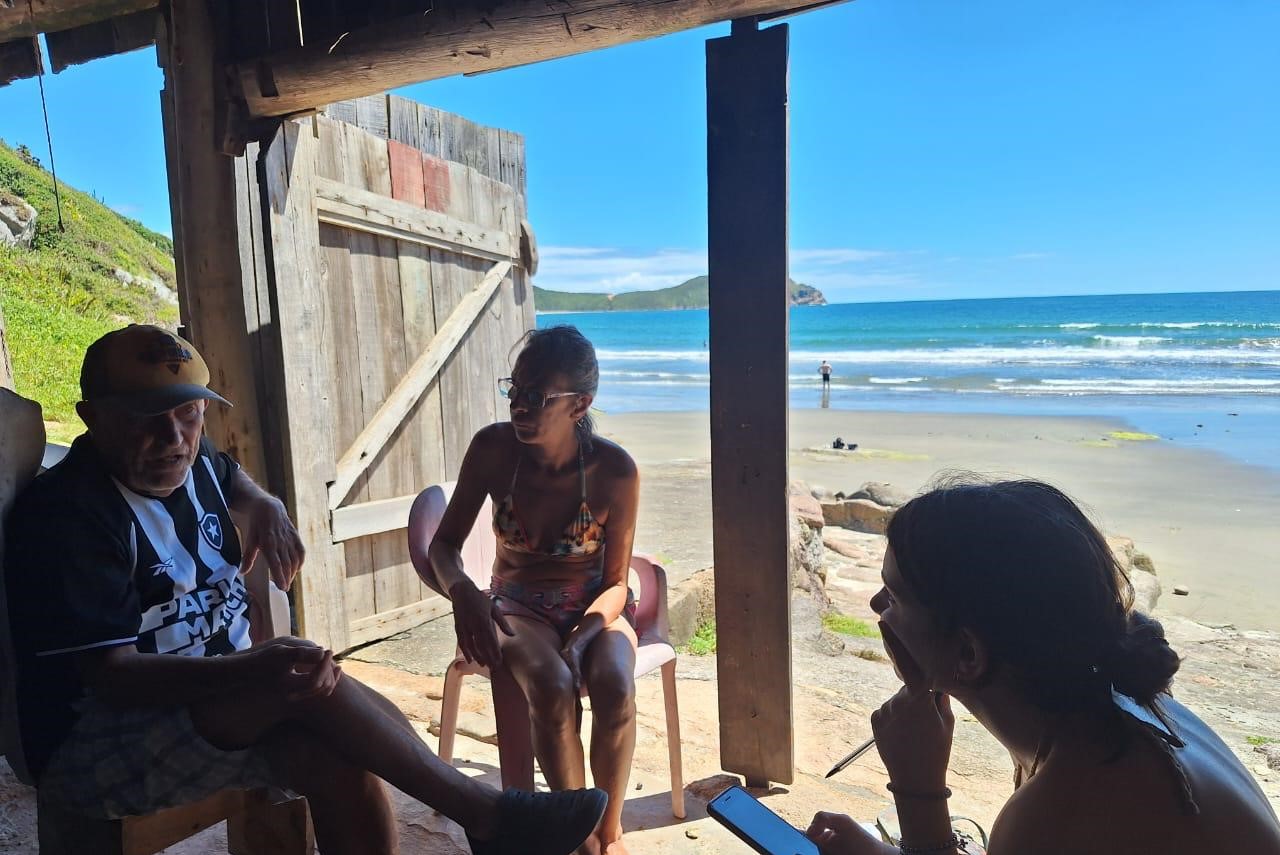
In the enchanting Praia do Rosa, in Garopaba, artisanal fishermen shared the challenges they face every year during the Tainha fishing season. At this time of year, traditional fishing—practiced for generations—is essential for the survival of many local families.
However, the growing presence of surfers who sometimes overlook the regulations established to protect this activity has generated conflict and concern within the fishing community. This situation highlights the need for more mindful and respectful tourism, where different activities can coexist in balance, ensuring both the preservation of local culture and the sustainability of the territory.
The town is also one of Brazil’s main whale-watching sites, specifically for the southern right whale (Eubalaena australis), which visits Garopaba’s waters every year. Between July and November, these majestic cetaceans migrate from the cold Antarctic to reproduce and nurse their calves in warmer and safer waters.
Today, responsible land-based whale-watching tourism has become a sustainable alternative that contributes to the conservation of this species—protecting their resting periods and delicate nursing stage—while still vulnerable.
LAGOA ENCANTADA
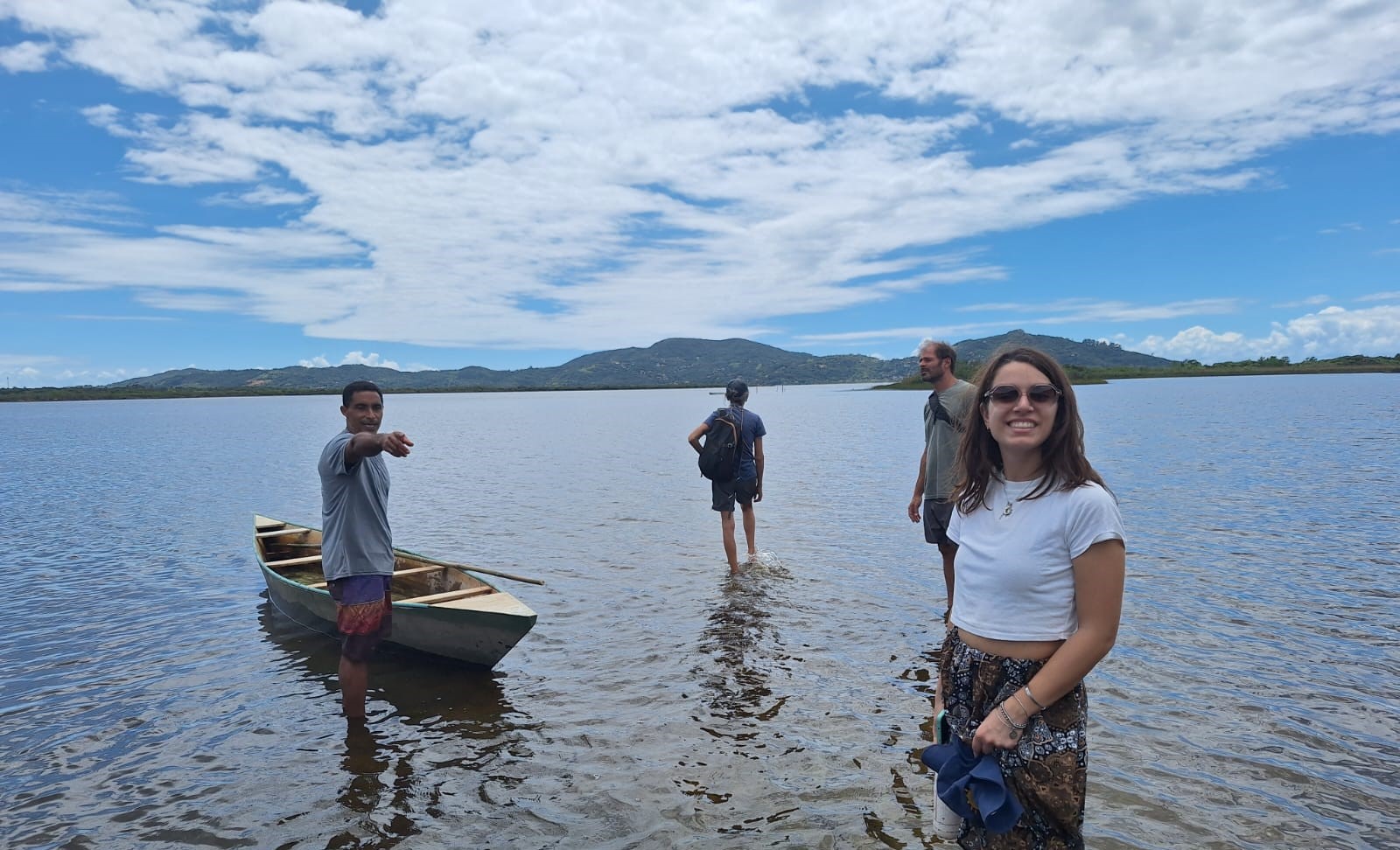
For local communities, tourism is seen as both an opportunity to share their culture and generate income, and a potential threat: uncontrolled development could degrade biodiversity and disrupt the cosmic balance that governs their connection to nature.
Children themselves explained how, if a small fish accidentally ends up in the wrong pond, they return it to the lake; often caring for it and allowing it to grow before release.
At the end of the lake’s route—connected to the sea—one arrives at the beach, where dogs, children, and “occasional” fishermen invent fishing games for fun.
MERCADO DO PRODUTOR
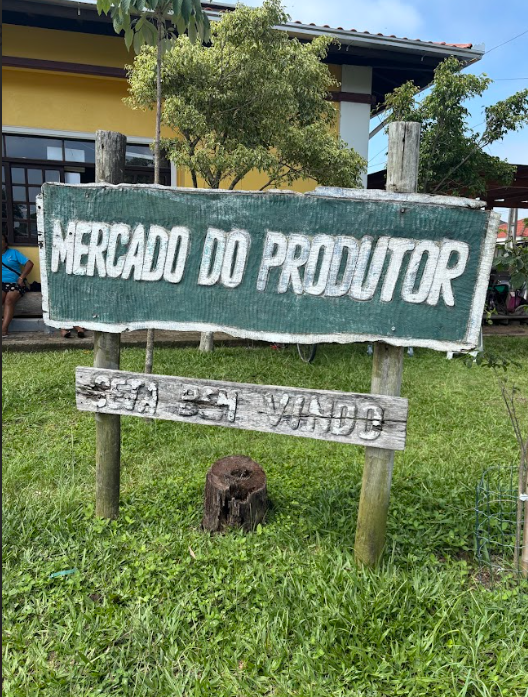
The Mercado do Produtor of Garopaba is a local market partially funded by the municipality and entirely managed by those who use it. This space not only promotes and values local products—mostly organic—but also represents a vital meeting point for the community.
From fresh fruits and vegetables to artisanal body care products, the market reflects a strong commitment to sustainability and territorial identity. Every Saturday morning, the space comes alive with music and the colors of nature, offering both residents and visitors an authentic experience that strengthens the link between local production and regional culture.
SEU JOAQUIM Y FAMÍLIA
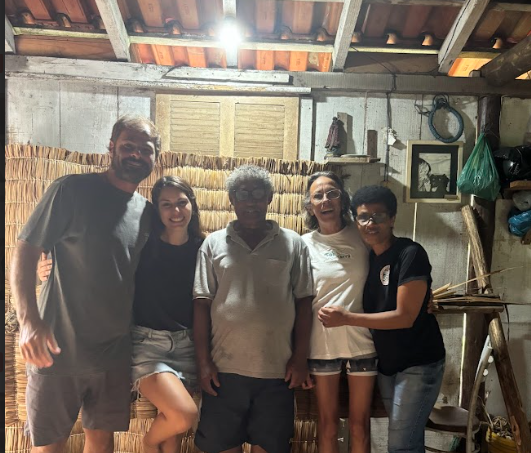
Local craftsmanship is another fundamental pillar of the region’s identity, a knowledge that has withstood the passage of time thanks to families like that of Seu Joaquim, who have kept alive the tradition of weaving Esteira de Taboa and Junco, as well as crafting straw hats from butiá palm. For years, they saw their art fall into oblivion: sales declined, few knew of their work, and sometimes they themselves doubted its value.
Community-based tourism gave them back much more than income: it restored their confidence and a deep sense of belonging. They are moved when recounting childhood memories, when they didn’t yet understand the value of their tradition and family craft.
Today, watching their hands proudly weave taboa, passing on their skills to new generations, and receiving admiration from those who value their art has been a rebirth. For them, it means feeling that their history and identity are once again part of the present. When they look at their creations now, they don’t just see intertwined fibers, but the living testimony of a culture that, against all odds, continues to thrive.
QUILOMBO DE GAROPABA
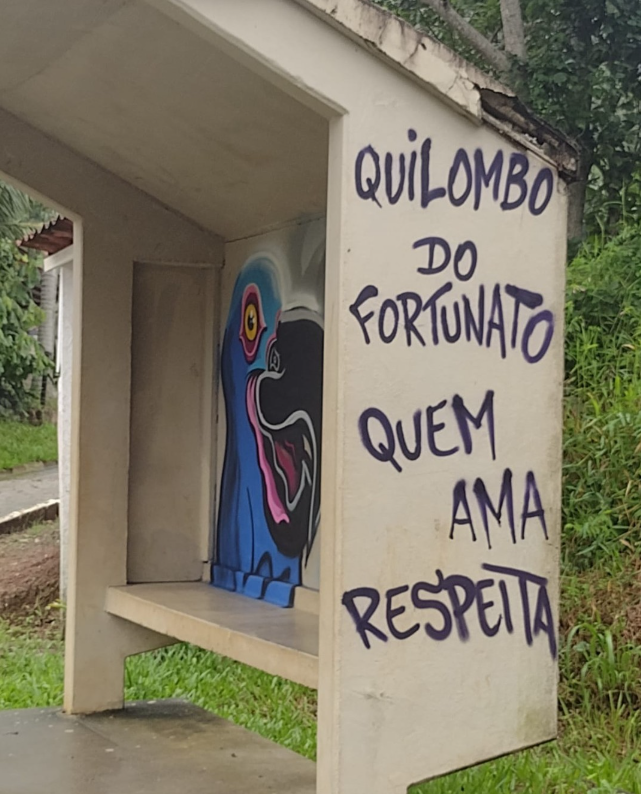
At the top of Morro do Fortunato lies the Quilombo de Garopaba, a place of memory, resistance, and rebirth. A quilombo is a community formed by descendants of enslaved Africans who, centuries ago, escaped colonial plantations to create their own spaces of freedom.
The feeling this extraordinary community evokes is that the times of isolation are long gone; on the contrary, they have embraced cultural and educational exchanges, allowing young people to live and love their traditions.
Today, the Quilombo de Garopaba not only opens its doors to the world but has also developed a strong sense of hospitality and the desire to share its history. Warmth, generosity, and joy are a constant embrace here.
And one cannot speak of the quilombo without mentioning its beautiful Hilàrio Verduras Orgânicas garden and the homemade sweets and breads of Mercedes, Isabel, Gloria, and Dinha, which are brought weekly to the Mercado do Produtor.
In Hilário Verduras’ garden, Ana and Paula shared a moving story: that of a father and his two daughters who, for a long time, did not fully grasp the depth of their legacy. Everything changed when he suffered a serious accident. With courage and determination, the daughters took up his dream, transforming it into a source of pride for the whole community. Not only did they keep it alive, but they grew and evolved it into a hidden gem—a “for the few” tourist attraction that, with its stunning landscape and the warmth of the quilombo, has become a unique gathering place.
Today, this garden not only nourishes the family but also symbolizes the strength of those who fight to preserve their roots and build a dignified future upon them.

THE TOURISM WE ENVISION
The tourism we want to promote is tourism that is born from and for the community, where the true protagonists are those who inhabit and protect the territory. A slow, mindful, and sustainable tourism that respects the rhythms of nature and local traditions, ensuring that visitors do not disrupt ecological balance or cultural identity.
It is a model that does not seek to replace essential activities such as fishing, farming, or craftsmanship, but rather to complement and revalue them—generating opportunities without compromising the future of communities.
Author: Simona Signorile.

Leave a Reply